
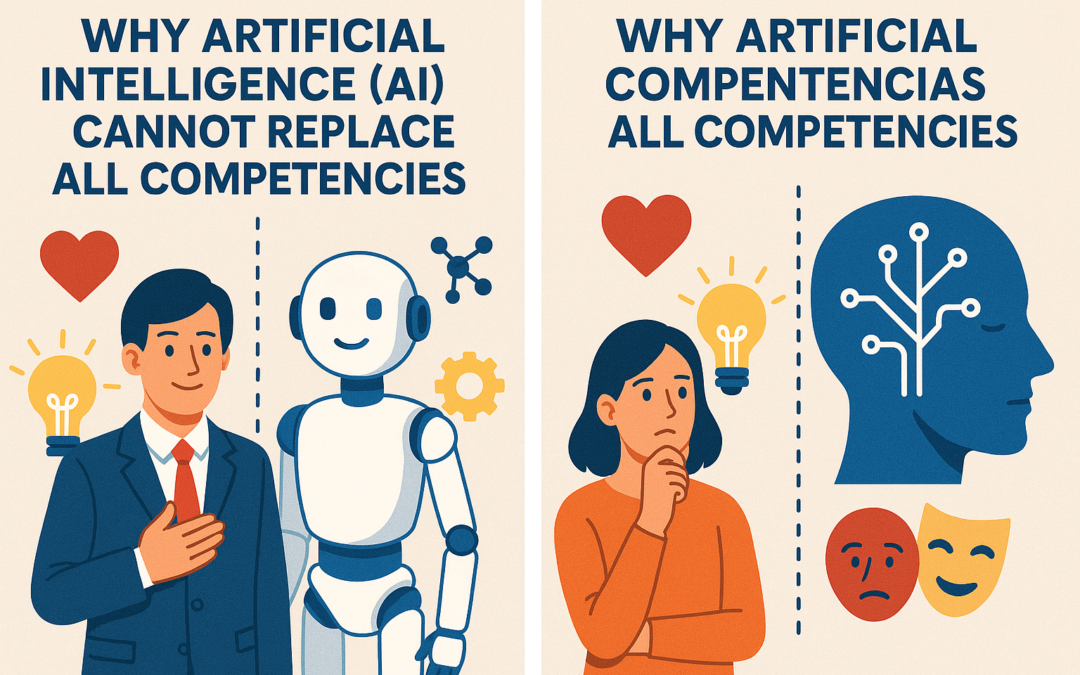
Artificial Intelligence (AI) excels in processing vast amounts of data, identifying patterns, and performing tasks with speed and accuracy. However, it lacks the ability to replicate certain human traits, such as empathy, ethical reasoning, and nuanced creativity. These competencies are rooted in emotional intelligence, context, and human experience—qualities that are essential in complex decision-making, interpersonal interactions, and leadership roles.
While AI might be a tool to enhance productivity, it is ultimately humans who wield it effectively. Developing competencies that cannot be automated ensures that people remain indispensable in the workplace of tomorrow.
The Key Irreplaceable Competencies
1. Emotional Intelligence (EI)
AI can analyse sentiment and recognise emotions to a certain extent, but it cannot truly feel or empathise. Emotional intelligence, which includes skills such as empathy, active listening, and emotional regulation, is critical in fields like counselling, healthcare, education, and leadership.
Teaching emotional intelligence helps individuals build stronger relationships, resolve conflicts, and foster collaborative environments—tasks that are inherently human.
2. Creativity and Innovation
While AI can generate designs, compose music, or write articles, it does so by analysing existing patterns. Human creativity, on the other hand, is limitless and often involves connecting unrelated concepts to solve problems in unique ways. Encouraging original thinking and innovation ensures that people remain at the forefront of ideation and strategy, areas where AI can only play a supportive role.
3. Critical Thinking and Problem-Solving
AI provides insights, but it cannot evaluate the ethical, societal, or contextual implications of decisions. Human critical thinking is crucial in navigating ambiguity, addressing complex challenges, and making judgements that align with organisational and societal values. Teaching analytical reasoning, systems thinking, and ethical frameworks prepares individuals to oversee and manage AI’s outputs effectively.
4. Leadership and Influence
Effective leadership involves inspiring teams, navigating change, and making values-driven decisions—skills that AI cannot replicate. Charisma, vision, and the ability to unite people around a common purpose are hallmarks of great leaders. Leadership development programmes should prioritise competencies like adaptability, communication, and motivational skills to cultivate leaders who can guide human-AI collaboration.
5. Cultural Competence and Ethical Decision-Making
AI lacks the ability to understand cultural nuances, traditions, or ethical grey areas. These competencies are critical in a globalised world where businesses operate across diverse regions and ethical dilemmas abound. Teaching individuals to navigate cultural sensitivities and make principled decisions ensures that technology serves humanity responsibly.
Conclusion
The age of AI is not a call to compete with machines but an invitation to redefine human roles. By focusing on irreplaceable competencies, we can ensure that people remain at the heart of innovation, leadership, and decision-making. Teaching these skills is not only essential for individual success but also for building a workforce capable of steering technology towards a brighter, more inclusive future.
In this new era, humans are not being replaced—they are being redefined. It is time to embrace that transformation with purpose and foresight.